
Lawn Fertilizer Schedule for North Carolina Fescue Lawns
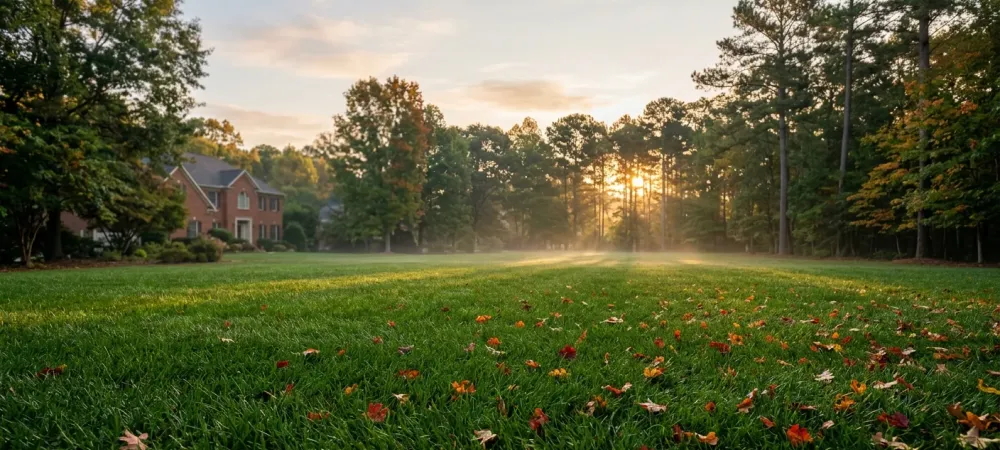
The best lawn fertilizer schedule North Carolina fescue lawns can follow is built around fall, not late spring. That surprises a lot of homeowners across the Piedmont, from Mebane, NC to Chapel Hill, NC. Fescue is a cool-season grass, so it does its hardest growing, and needs its biggest meals, when the weather cools down.
Here is the short version for tall fescue, based on NC State Extension's tall fescue maintenance calendar and its Carolina Lawns guide:
- Mid-September: 1 pound of nitrogen per 1,000 square feet
- November: 0.5 to 1 pound
- February: 0.5 to 1 pound
- Spring: optional, light amounts only
- Summer: optional, light amounts only, and only if the lawn needs recovery
The two NC State publications differ slightly on the November and February amounts, which is why those are shown as ranges. The rest of this guide explains why the calendar works this way and what to do if you are behind.
Why Fescue Follows Its Own Fertilizer Calendar
The best time to fertilize a lawn in NC depends on the grass under your feet. Fescue grows hardest in fall and early spring, stays mostly green through winter, and struggles in summer heat. Feed it at the wrong time and you may pay for fertilizer the lawn cannot put to good use.
Fall feeding matters most. According to NC State Extension, it fuels the root growth that carries a cool-season lawn through the following summer.
Not sure what you have? Look at your lawn in January. If it turns tan after hard frosts, you likely have a warm-season grass like Bermuda, zoysia, or centipede. For those lawns, the answer to when to fertilize grass in NC is almost reversed: late spring through summer. This guide is for fescue.
When to Fertilize Fescue in NC, Season by Season
Mid-September: The First Fall Feeding
Early fall is when fescue recovers from summer stress and starts building roots again. NC State Extension recommends 1 pound of nitrogen per 1,000 square feet in mid-September. If you have to prioritize, put the fall applications first.
Fall is also when NC State Extension suggests aerating lawns with heavy traffic or clay soil, which is common across the Piedmont. If that sounds like your yard, core aeration belongs on your fall list too.
November: The Second Fall Feeding
NC State Extension's calendar calls for a second 1-pound application in November, when the grass is still green but no longer actively growing. Its Carolina Lawns guide shows a lighter 0.5-pound November feeding for a basic Piedmont plan.
Missed September? Do not try to make up for it with a heavier dose. Pick the schedule back up in November at the recommended rate.
February: A Late-Winter Boost
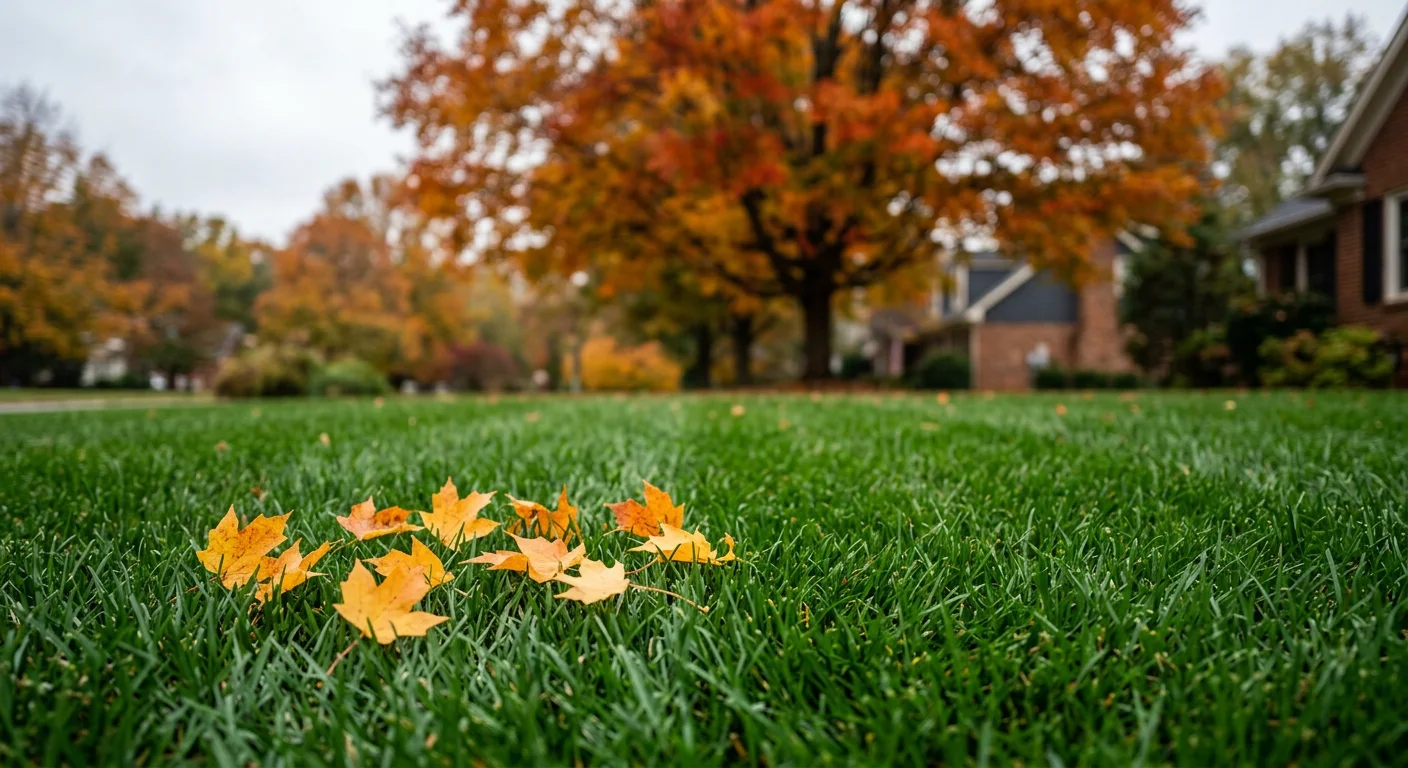
Fescue starts growing again in late winter. NC State Extension's calendar recommends 1 pound of nitrogen per 1,000 square feet in February, while the Carolina Lawns guide shows 0.5 pound for a basic Piedmont plan. Either way, it gives the lawn fuel for the early-spring push.
Spring and Summer: Keep It Light
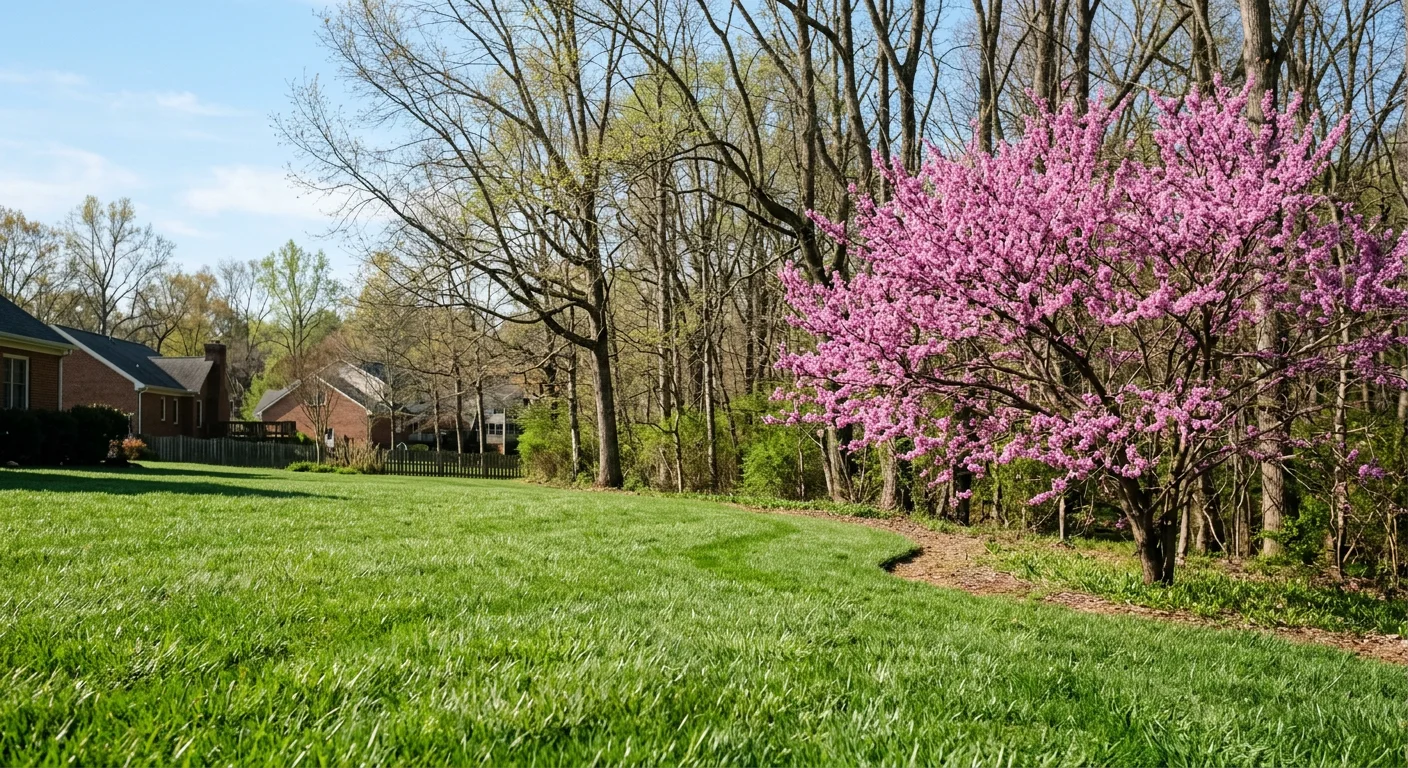
The urge to fertilize hits in spring, but fescue does not need much. NC State Extension treats spring feeding as optional, to promote color and recovery from damage. If you do feed, it calls for small amounts, between one-fifth and one-half pound of nitrogen per 1,000 square feet, with lower amounts after March 15.
Summer follows the same rule. NC State Extension lists that same light range, only as needed for recovery. The Carolina Lawns guide also advises against high nitrogen on cool-season grass in late spring and summer, because disease can be more common at higher rates. Tall fescue is highly susceptible to brown patch, which develops in high humidity and heat. Skip heavy feeding, and use the slow months to get ready instead. Our guide to preparing your lawn in late summer covers what to do before the fall application.
How Much Fertilizer to Apply
The schedule tells you when. The bag and a little math tell you how much. Rates are based on pounds of nitrogen, which is the first number in the three-number grade printed on every bag.
To find how much product delivers 1 pound of nitrogen per 1,000 square feet, divide 100 by that first number. A 10-10-10 bag works out to 10 pounds of product. A 16-4-8 bag works out to 6.25 pounds. Then multiply by the size of your lawn in thousands of square feet.
Before you buy, consider a soil test. NC State Extension recommends one at least every two to three years to learn how much lime, phosphorus, and potassium your lawn needs, so you are not guessing. If you skip the test, NC State suggests a complete turf-grade fertilizer with a 3-1-2 or 4-1-2 ratio, such as 12-4-8 or 16-4-8, though it calls that a poor substitute for testing.
Common Fescue Fertilizing Mistakes
- Feeding fescue in spring the way you would feed a warm-season lawn.
- Applying heavy rates in summer, when NC State keeps feeding light and only as needed.
- Doubling up on the next application to "catch up" after a missed one.
- Skipping the soil test and guessing what the lawn needs.
Let Superior Green Handle the Timing
Tracking a few applications a year is easy to put off. Whether you follow this lawn fertilizer schedule for North Carolina fescue yourself or hire it out, the goal is the same. Use the right product, at the right rate, at the right time.
If you would rather leave it to the experts, Superior Green's lawn care professionals can help. NC State notes that professional programs may follow a different schedule and still be effective, and our plans pair fertilization with weed control and soil amendments. Our lawn fertilization service is available to homeowners in Mebane, NC, Burlington, NC, Hillsborough, NC, Chapel Hill, NC, Graham, NC, and the surrounding areas. Reach out for a free quote.