
Fall Weed Control in NC: Stop Winter Weeds Before Spring
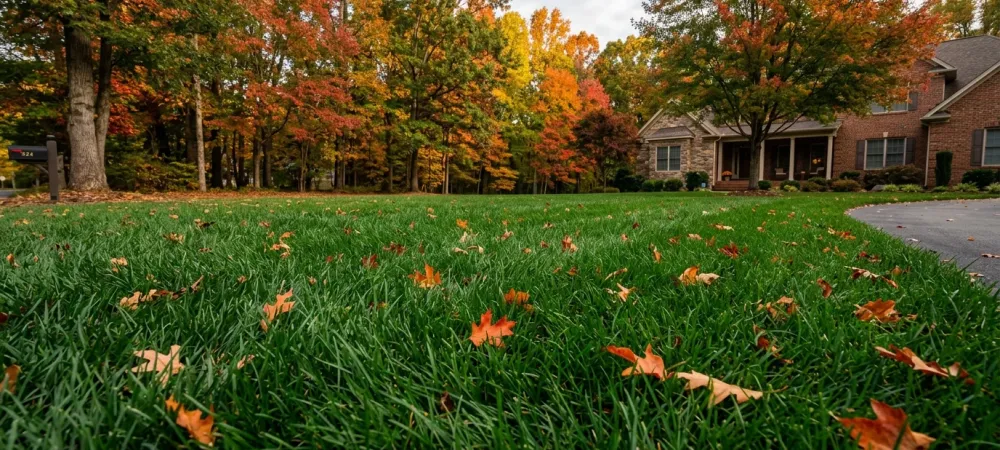
Cooler weather gives your lawn a break from summer stress. Unfortunately, it also gives a whole new set of weeds their chance to move in. Across the Piedmont, winter weeds sprout in fall’s cool, moist soil. They spread quietly through the colder months, then burst into view right when you want your lawn looking its best.
The good news is that fall weed control in NC is one of the most effective lawn treatments of the year. Weeds are young, small, and easy to target right now. Here’s what to look for and how to time it.
Why Weeds Don’t Take the Winter Off in North Carolina
Most homeowners think of weeds as a summer problem. Crabgrass, nutsedge, and spurge get most of the attention, and we covered them in our summer weed control guide. But a second group of weeds runs on the opposite schedule.
These winter weeds germinate as soil temperatures drop in fall. They grow slowly through mild winter days, then flower and drop seed in late winter and spring. Many die off once summer heat arrives, leaving thin or bare spots behind. Those gaps make an easy landing zone for next summer’s crabgrass.
The Winter Weeds Most Likely in Your Lawn
According to NC State’s turfgrass weed specialists, annual bluegrass is the most troublesome turf weed in the state. It has plenty of company. Here are the winter weeds North Carolina homeowners are most likely to run into.
Annual Bluegrass (Poa Annua)
Annual bluegrass looks like lighter green, clumpy grass mixed into your lawn. In spring, it sends up white seedheads that stand out against darker fescue. It dies back in summer heat, often leaving bare patches where it grew.
Henbit and Chickweed
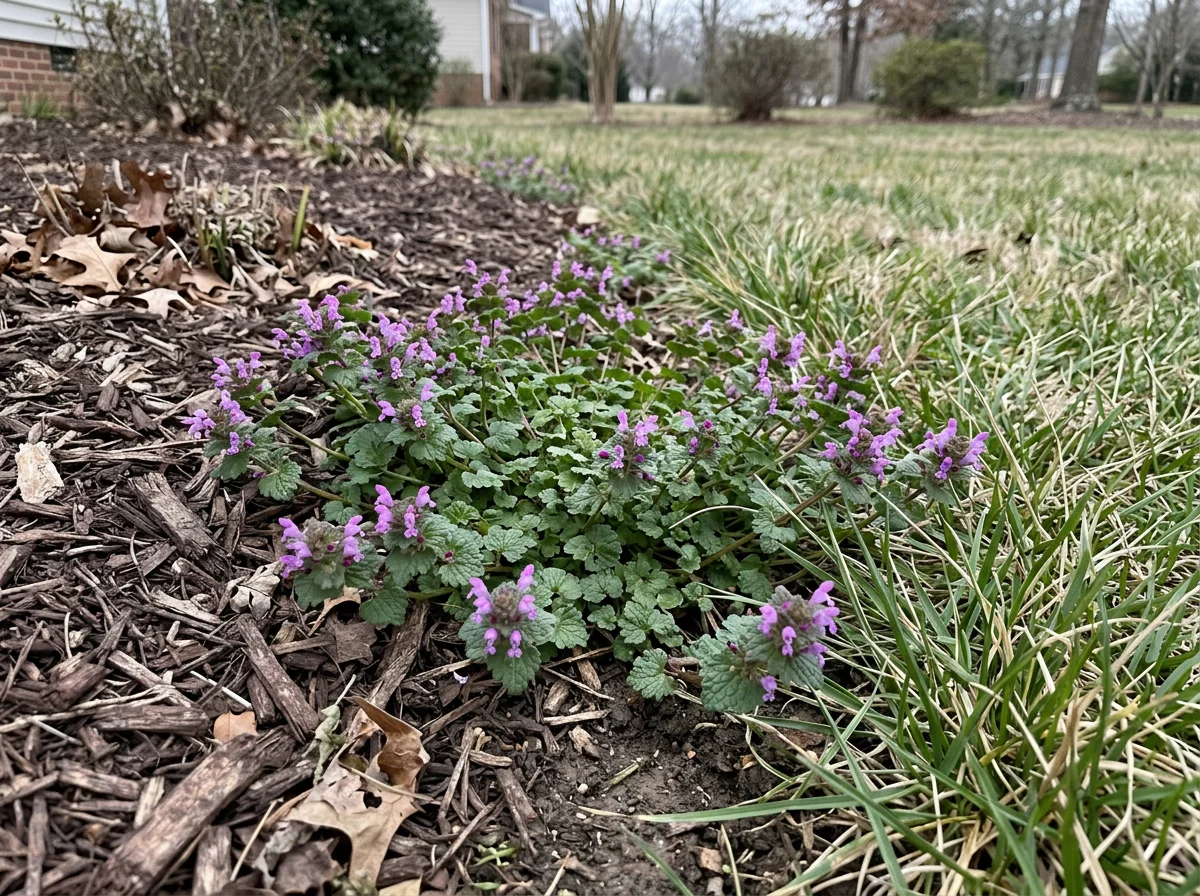
These low-growing broadleaf weeds form spreading mats in thin areas, bed edges, and shady spots. Henbit has square stems, scalloped leaves, and small purple flowers by late winter. Chickweed forms a dense, bright green carpet dotted with tiny white flowers.
Wild Garlic and Wild Onion
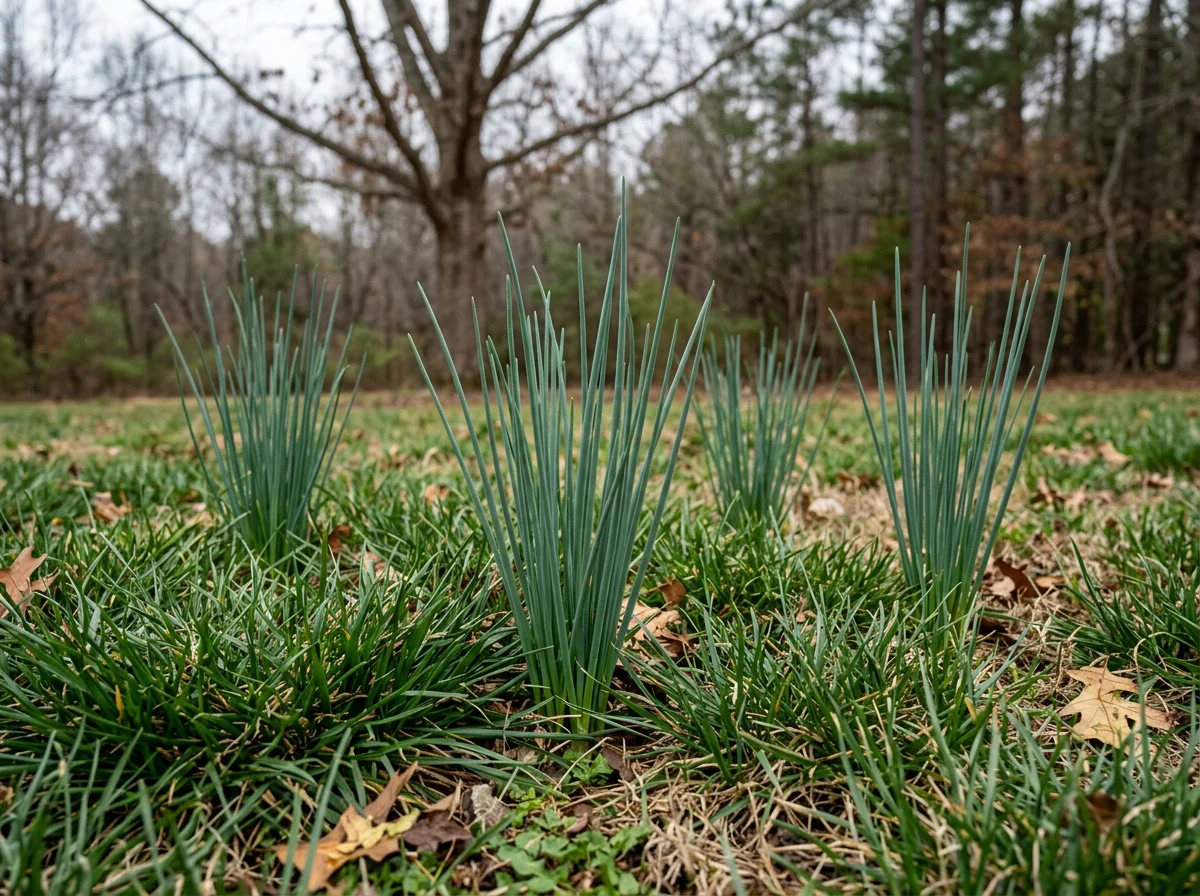
Do you see thin, grass-like shoots standing taller than the rest of your lawn this time of year? It’s likely wild garlic. Crush a leaf and the smell will tell you for sure. Wild garlic is a perennial that grows actively in fall. It spreads through small underground bulblets, so one treatment rarely finishes the job. Plan on follow-up treatments over more than one season.
Dandelion and White Clover
These perennial broadleaf weeds stick around all year. Fall is a smart time to treat them while they are still actively growing.
Why Fall Is the Best Window for Weed Control
When it comes to winter weeds, timing matters as much as the product. NC State recommends scouting in late September and October, then treating from October into early December. That window works for three reasons:
- Weeds are young. Small, actively growing weeds with shallow roots are much easier to control than mature plants.
- You beat the cold. Treating before cold weather slows weed growth gets better results than waiting until midwinter.
- You stop next year’s seed. Controlling winter weeds before they flower means fewer seeds waiting in your soil next fall.
A thick, well-fed lawn also crowds out weeds on its own. That’s why weed control works best as part of a complete lawn care and weed control program, not a one-time spray.
Timing Weed Control Around Fall Seeding
Fall is also prime time for seeding fescue lawns, and the two don’t always mix. Many weed control products can harm young grass, and some keep seed from sprouting at all.
NC State’s guidance is to wait three to four weeks after a weed control application before seeding. If you seed first, hold off on most treatments until the new grass is well established. That often means waiting until spring. Always read the product label, since timing varies from one product to the next.
Planning Ahead for Spring Weeds
The work you do this fall and winter sets up your spring lawn. Any henbit or chickweed left untreated now will be in full bloom by late winter, scattering seed for next year.
If a few winter weeds slip through, you still have options. The NC State tall fescue maintenance calendar lists broadleaf treatments for henbit and chickweed as needed from December through February. The same calendar recommends crabgrass pre-emergent in early March, and sooner in the Piedmont. Mark your calendar now so that window doesn’t pass you by.
Get Ahead of Winter Weeds This Season
Winter weeds are easiest to beat while they are small, and that window is open right now. Superior Green’s lawn care program includes pre-emergent and post-emergent weed control timed to the Central NC growing calendar. Every treatment uses EPA-approved products applied by licensed professionals.
Our team serves homeowners in Mebane, NC, Burlington, NC, Graham, NC, Chapel Hill, NC, and the surrounding areas. We also provide weed control in Hillsborough, NC. Fall weed control in NC pays off all spring, so don’t wait for the purple flowers to show up. Request a free quote and start next spring with a thicker, healthier lawn.